

Raj had lived with diabetes for nearly ten years. One evening, after removing his shoes, he noticed a small blister near the ball of his foot. It did not hurt. In fact, if he had not seen it, he might never have known it was there. Assuming it would heal on its own, he ignored it for several days.
Fortunately, a routine check-up led to early treatment before the wound became serious. Stories like Raj’s are surprisingly common. Many diabetic foot ulcers begin as seemingly harmless skin changes that cause little discomfort. Because diabetes can affect sensation and circulation, minor injuries may go unnoticed until they become difficult to treat.
The encouraging news is that an early stage diabetic foot ulcer is often highly manageable when recognized promptly. Understanding the warning signs, risk factors, and treatment options can help prevent complications and protect long-term mobility. After all, healthy feet are not simply about walking comfortably. They support independence, confidence, and the freedom to enjoy everyday life.
What is an Early Stage Diabetic Foot Ulcer?
An early stage diabetic foot ulcer is a shallow wound or open sore that develops on the foot of a person with diabetes. These ulcers most commonly occur on pressure-bearing areas such as the heel, sole, toes, or ball of the foot. At first, the ulcer may resemble a blister, crack, callus-related wound, or a small area of redness. The injury may appear insignificant, yet beneath the surface the healing process may already be impaired. Unlike advanced ulcers that extend into deeper tissues, an early stage diabetic foot ulcer is generally limited to the outer layers of the skin. This stage provides the best opportunity for successful treatment and recovery.
Why Diabetic Foot Ulcers Develop
Diabetic foot ulcers usually result from a combination of factors working together over time. Persistently elevated blood sugar levels can damage nerves, leading to diabetic neuropathy. As sensation decreases, cuts, blisters, pressure points, and injuries become more difficult to detect. Diabetes can also impair blood circulation. Reduced blood flow means fewer nutrients and less oxygen reach damaged tissues, slowing the healing process. Meanwhile, repetitive pressure from walking, standing, or poorly fitted footwear gradually weakens vulnerable areas of the foot. When these factors combine, even a small injury can develop into an early stage diabetic foot ulcer.
Common Diabetic Foot Ulcer Symptoms
The earliest warning signs are often subtle.
- Persistent redness, skin discoloration, or darkened areas may indicate pressure-related tissue damage before a wound becomes visible.
- A blister, crack, cut, or sore that heals slowly should never be ignored, especially in individuals with diabetes.
- Drainage or staining on socks may signal a hidden wound beneath a callus or thickened skin.
- Swelling, warmth, tenderness, or mild inflammation can indicate the body’s response to tissue injury.
- Thick calluses developing repeatedly in the same area often suggest excessive pressure that may eventually lead to ulcer formation.
- Unpleasant odor or unusual discharge may indicate bacterial growth and should be evaluated promptly.
Many patients are surprised to learn that an early stage diabetic foot ulcer may cause little or no pain. This is precisely why regular foot inspections are so important.
Causes and Risk Factors
| Risk Factor | How It Increases Ulcer Risk |
| Peripheral Neuropathy | Reduces the ability to feel injuries |
| Poor Blood Circulation | Slows healing and tissue repair |
| High Blood Sugar Levels | Weakens immunity and damages blood vessels |
| Foot Deformities | Creates abnormal pressure points |
| Improper Footwear | Causes friction and repetitive injury |
| Smoking | Restricts blood flow |
| Previous Foot Ulcers | Increases recurrence risk |
| Vision Problems | Makes self-inspection difficult |
Understanding these risk factors allows individuals to take preventive action before complications occur.
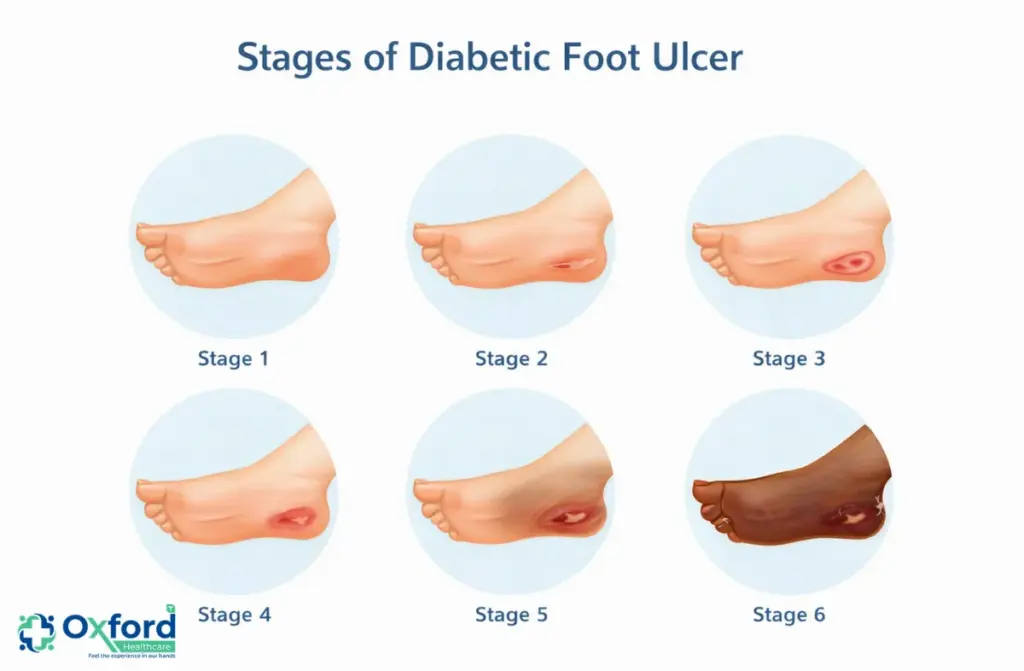
How an Early Stage Diabetic Foot Ulcer Can Progress
One of the most important facts about diabetic foot ulcers is that severe complications rarely happen overnight.
The progression often follows a predictable pattern:
Stage 1: Persistent redness or pressure point
Stage 2: Blister, callus breakdown, or skin cracking
Stage 3: Development of an early stage diabetic foot ulcer
Stage 4: Bacterial infection enters the wound
Stage 5: Infection spreads into deeper tissues
Stage 6: Serious complications involving muscles, tendons, or bone
Understanding this progression highlights why immediate attention to even small foot injuries is so critical.
Why Early Diagnosis Matters
Early diagnosis often determines whether treatment remains simple or becomes increasingly complex.
A small wound discovered early may heal with wound care, pressure relief, and improved blood sugar management. The same wound left untreated can gradually enlarge, become infected, and require extensive medical intervention. Healthcare experts frequently emphasize that most diabetes-related lower limb amputations are preceded by a foot ulcer. This makes prevention and early detection among the most important aspects of diabetes management.
As many wound-care specialists explain:
“The best diabetic foot ulcer is the one that never develops. Daily foot checks remain the most powerful preventive tool available.”
Treatment Options for Early Stage Diabetic Foot Ulcer
Healthcare professionals usually begin by carefully examining and cleaning the wound. Specialized dressings may be applied to maintain an ideal healing environment. Pressure reduction, known as offloading, is equally important. This may involve custom footwear, orthotics, protective boots, or temporary activity modifications.
Maintaining stable blood sugar levels supports tissue repair, strengthens immune function, and improves overall healing outcomes. When necessary, healthcare providers may prescribe antibiotics, advanced wound therapies, or circulation-related interventions.
Healing Timeline: What to Expect
Healing times vary from person to person, but understanding general expectations can be reassuring.
| Condition | Typical Healing Expectation |
| Mild redness or irritation | Several days |
| Small superficial wound | A few weeks |
| Early stage diabetic foot ulcer | Several weeks with proper treatment |
| Infected ulcer | Several weeks to months |
| Deep tissue ulcer | Extended treatment and specialist care |
The sooner treatment begins, the better the chances of achieving faster healing.
Daily Foot Care Tips for Diabetic Patients
Consistent daily care remains one of the most effective strategies for preventing diabetic foot complications.
- Inspect your feet every day, including the soles, heels, and spaces between the toes. Look carefully for cuts, redness, swelling, blisters, calluses, or skin color changes. A few minutes of observation can prevent months of treatment.
- Wash your feet gently using lukewarm water and mild soap. Dry thoroughly, especially between the toes, and apply moisturizer to prevent cracking while avoiding excessive moisture in areas prone to fungal infections.
Simple habits performed consistently often provide extraordinary protection.
Lifestyle Habits That Support Healing
Healing begins long before a dressing is applied. Nutritious meals rich in protein, vitamins, minerals, fruits, vegetables, and whole grains provide the building blocks required for tissue repair. Adequate hydration supports circulation and cellular function. Regular physical activity, when approved by a healthcare professional, helps improve blood flow throughout the body. Quality sleep allows the immune system and healing mechanisms to function more efficiently.
Avoiding tobacco products is especially important because smoking significantly restricts blood flow and delays recovery. These lifestyle choices may seem small individually, but together they create a powerful foundation for healing.
When to See a Doctor Immediately
Certain symptoms require urgent medical attention.
- Increasing redness, swelling, warmth, or tenderness around the wound may indicate a spreading infection that requires immediate treatment.
- Fever, pus drainage, blackened skin, foul odor, rapidly enlarging wounds, or sudden color changes should never be ignored and warrant prompt medical evaluation.
Seeking help early often prevents complications and improves outcomes.
Emotional Impact of Diabetic Foot Problems
The emotional effects of diabetic foot complications are often underestimated. Many people worry about losing mobility, becoming dependent on others, or facing long-term health challenges. Even a small wound can trigger significant anxiety, especially for individuals who have heard stories about severe diabetic foot complications.
Remember Raj, who noticed a blister and almost ignored it?
His experience highlights an important truth. Early action changes outcomes.
An early stage diabetic foot ulcer is not a reason to panic. It is a signal to take action. With timely treatment, proper foot care, and ongoing medical support, many ulcers heal successfully without progressing to serious complications. Knowledge reduces uncertainty. Prevention builds confidence. Early intervention protects independence.
As Maya Angelou wisely said: “Hope and fear cannot occupy the same space at the same time. Invite one to stay.”
Final Encouragement
An early stage diabetic foot ulcer may begin as a small wound, but the decisions made during those early days can have a lasting impact. Daily foot inspections, proper footwear, healthy blood sugar management, regular medical evaluations, and prompt treatment of minor injuries remain the cornerstones of prevention.
Every healthy step begins with awareness. The few minutes you spend checking your feet today may help preserve your mobility, independence, and quality of life for many years to come.
Read also: Top Hospitals for Diabetes in Mogappair