Planning for a family is an exciting journey, but for some individuals and couples, questions about fertility can create uncertainty and stress. Understanding your reproductive health is an important step toward making informed decisions about pregnancy and future family planning. Fortunately, modern medical advancements have made it possible to evaluate fertility through a range of simple and effective tests that provide valuable insights into reproductive function.
A Fertility Test for Women helps assess factors such as hormone levels, ovulation, ovarian reserve, and the health of reproductive organs. Whether you are actively trying to conceive, preparing for pregnancy in the future, or simply want to better understand your reproductive health, fertility testing can offer clarity, reassurance, and guidance. Early evaluation can also help identify potential concerns and improve the chances of achieving a healthy pregnancy with timely medical support.
What are Fertility Tests, and When Should you Take Them?
Fertility tests are medical evaluations used to assess reproductive health in both women and men. These tests help determine whether any factors may be affecting the ability to conceive naturally.
Doctors may recommend fertility testing if:
- A couple has been trying to conceive for more than 12 months without success.
- A woman is over 35 and has been trying to conceive for six months or longer.
- There is a history of irregular menstrual cycles.
- A woman has experienced multiple miscarriages.
- There is a known reproductive health condition such as endometriosis or polycystic ovary syndrome (PCOS).
- A man has a history of low sperm count or reproductive health issues.
- Couples want to assess reproductive health before planning a pregnancy.
Some individuals also choose fertility testing proactively to better understand their reproductive health and future family planning options.
What are the Various Tests Performed to Check Fertility in Women?
Female fertility depends on several factors, including hormone balance, regular ovulation, healthy reproductive organs, and overall physical health. Doctors often recommend a combination of tests to obtain a complete picture of fertility status.
These tests help answer common questions such as how to test for women’s fertility and determine whether conception difficulties may be linked to ovulation, hormonal changes, or structural conditions affecting the reproductive system.
The specific tests recommended vary based on age, medical history, symptoms, and reproductive goals.
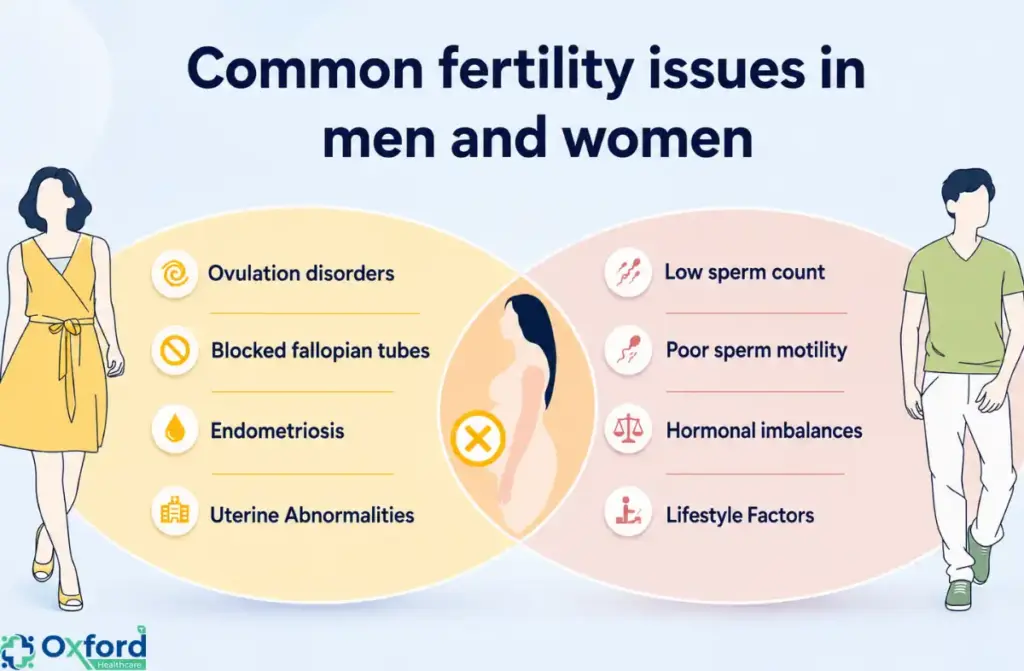
Female Fertility Tests: What They Include
Hormone Testing: Hormones play a critical role in regulating ovulation and reproductive function. Doctors may recommend a blood test for women’s fertility to measure important reproductive hormones, including:
- Follicle-Stimulating Hormone (FSH): FSH helps stimulate egg development within the ovaries. Abnormal levels may indicate reduced ovarian function or other fertility concerns.
- Luteinizing Hormone (LH): LH triggers ovulation. Monitoring LH levels helps assess whether ovulation is occurring normally.
- Estradiol: Estradiol is a form of estrogen that supports reproductive health and menstrual cycle regulation.
- Progesterone: Progesterone levels help confirm whether ovulation has occurred during a menstrual cycle.
- Anti-Müllerian Hormone (AMH): AMH testing provides information about ovarian reserve, which refers to the number of eggs remaining in the ovaries.
- Thyroid Function Tests: Thyroid disorders can affect ovulation and fertility. Evaluating thyroid hormone levels helps identify potential issues that may interfere with conception.
Ovulation Assessment
Regular ovulation is essential for natural conception. Doctors may assess ovulation through:
- Hormone testing
- Ovulation tracking
- Basal body temperature monitoring
- Ultrasound monitoring of follicle development
Understanding ovulation patterns helps determine whether eggs are being released consistently during each menstrual cycle.
Pelvic Ultrasound
Pelvic ultrasound is a safe and painless imaging test that allows doctors to examine the reproductive organs.
The scan helps evaluate:
- Ovarian health
- Uterine structure
- Presence of ovarian cysts
- Fibroids
- Endometrial thickness
Ultrasound can also help identify conditions such as PCOS and structural abnormalities that may affect fertility.
Hysterosalpingography (HSG)
An HSG is a specialized imaging procedure used to evaluate the uterus and fallopian tubes.
The test helps determine:
- Whether fallopian tubes are open
- Presence of blockages
- Structural abnormalities within the uterus
Blocked fallopian tubes can prevent sperm and egg from meeting, making conception difficult.
Hysteroscopy
Hysteroscopy allows doctors to examine the inside of the uterus using a thin camera.
This procedure may help diagnose:
- Polyps
- Fibroids
- Scar tissue
- Uterine abnormalities
Identifying and treating these conditions can improve fertility outcomes.
Ovarian Reserve Testing
As women age, both the quantity and quality of eggs naturally decline.
Ovarian reserve testing evaluates:
- Egg supply
- Reproductive potential
- Response to fertility treatments if required
These assessments can be particularly valuable for women considering future pregnancy planning.
The Importance of Specialist Evaluation
Interpreting fertility test results requires clinical expertise and individualized assessment.
At Oxford Hospitals, women receive comprehensive reproductive health evaluation under the care of Dr. Indhumathi Thayar, Consultant Obstetrician & Gynecologist (MBBS, MS – Obstetrics & Gynaecology). With extensive experience in women’s health, fertility assessment, pregnancy care, and gynecological management, she helps patients understand their reproductive health and guides them through appropriate investigations and treatment options.
Personalized evaluation ensures that each woman receives recommendations based on her unique medical history, age, symptoms, and family planning goals.
Male Fertility Tests and Their Role in Conception
Fertility is not solely a female concern. Approximately one-third of fertility challenges involve male factors, making evaluation of both partners important.
Male fertility tests may include:
Semen Analysis
This is the most common male fertility test.
The analysis evaluates:
- Sperm count
- Sperm movement (motility)
- Sperm shape (morphology)
- Semen volume
Healthy sperm production is essential for successful conception.
Hormone Testing
Hormone evaluations may assess:
- Testosterone
- FSH
- LH
- Other reproductive hormones
Hormonal imbalances can affect sperm production and fertility.
Physical Examination
A specialist may evaluate:
- Testicular health
- Varicocele (enlarged veins)
- Structural abnormalities
These assessments help identify treatable causes of infertility.
Genetic Testing
In selected cases, genetic testing may be recommended when inherited conditions are suspected.
When to Take Pre-Pregnancy Tests for Men and Women
Pre-pregnancy testing allows couples to assess their overall health before conception.
These evaluations can help identify:
- Nutritional deficiencies
- Hormonal imbalances
- Chronic medical conditions
- Infectious diseases
- Fertility concerns
Many couples also consider a fertility test for women before marriage when planning future family goals and wanting greater insight into reproductive health.
Pre-pregnancy consultations often include:
- Medical history review
- Lifestyle assessment
- Vaccination updates
- Fertility evaluation
- Nutritional counseling
Preparing for pregnancy in advance helps create a healthier environment for conception and future pregnancy.
Interpreting the Results of a Fertility Test
Receiving fertility test results can feel overwhelming, but understanding the findings is an important step toward informed decision-making.
It is important to remember that a single abnormal result does not necessarily mean infertility.
Doctors consider multiple factors together, including:
- Age
- Medical history
- Menstrual cycle patterns
- Hormone levels
- Imaging findings
- Partner fertility status
Results may indicate:
- Normal Fertility Parameters: All evaluations appear within expected ranges, suggesting normal reproductive function.
- Ovulation Issues: Testing may reveal irregular or absent ovulation, which can often be treated successfully.
- Hormonal Imbalances: Hormone-related conditions may affect fertility but are frequently manageable with medical treatment.
- Structural Concerns: Conditions affecting the uterus, ovaries, or fallopian tubes may require further evaluation or intervention.
- Reduced Ovarian Reserve: This indicates a lower number of remaining eggs but does not automatically prevent pregnancy.
Understanding results alongside a qualified fertility specialist helps ensure accurate interpretation and appropriate next steps.
Tips for Improving Fertility
While some fertility factors are beyond personal control, healthy lifestyle choices can positively influence reproductive health.
Eat a Balanced Diet
A nutritious diet rich in:
- Fruits
- Vegetables
- Whole grains
- Lean proteins
- Healthy fats
supports overall reproductive health.
Manage Stress: High levels of chronic stress may affect reproductive health.
Helpful stress-management techniques include:
- Meditation
- Yoga
- Deep breathing exercises
- Adequate rest
- Relaxation activities
Maintain a Healthy Weight: Both underweight and overweight individuals may experience fertility challenges. Achieving a healthy weight can support hormone balance and regular ovulation.
Exercise Regularly: Moderate physical activity promotes healthy circulation, hormone balance, and overall wellness.
Avoid Smoking: Smoking can negatively impact egg quality, sperm quality, and overall fertility.
Limit Alcohol Consumption: Excessive alcohol intake may interfere with reproductive function and fertility outcomes.
Prioritize Sleep: Consistent, quality sleep supports hormonal regulation and overall health.
Seek Medical Advice Early: Early evaluation can identify concerns before they become more difficult to manage.
Timely intervention often improves treatment success and pregnancy outcomes.
Conclusion
Fertility testing is a valuable tool that helps individuals and couples gain a deeper understanding of their reproductive health. From hormone assessments and ovulation tracking to advanced diagnostic procedures, these evaluations can identify potential challenges and guide appropriate treatment when needed. Most importantly, fertility testing provides knowledge and confidence, helping people make informed decisions about family planning and pregnancy.
At Oxford Hospitals, women receive comprehensive fertility evaluation and personalized care under the expertise of Dr. Indhumathi Thayar, Consultant Obstetrician & Gynecologist (MBBS, MS – Obstetrics & Gynaecology). With advanced diagnostic facilities and a patient-centered approach, Oxford Hospitals supports women at every stage of their fertility journey. If you have concerns about fertility or are planning for pregnancy, seeking professional guidance early can be an important step toward achieving your parenthood goals and maintaining long-term reproductive health.